AI Proof Jobs: Secure Your Future in an Automated World
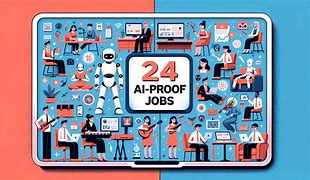
The rise of artificial intelligence (AI) is transforming the job market at an unprecedented rate. While AI offers numerous benefits, it also raises concerns about job displacement. Many are asking: What AI Proof Jobs exist that are safe from automation? This article explores careers that are less likely to be replaced by AI, providing insights into the skills and industries that offer long-term job security in an increasingly automated world.


Understanding the Threat of AI Automation
Before diving into specific AI Proof Jobs, it’s crucial to understand the types of tasks AI excels at and where it falls short. AI is particularly adept at repetitive, rule-based tasks, data analysis, and pattern recognition. This makes jobs involving routine data entry, manufacturing assembly, and basic customer service vulnerable to automation. However, AI struggles with tasks requiring creativity, emotional intelligence, critical thinking, complex problem-solving, and human interaction. These are the areas where human workers retain a significant advantage.
Factors Contributing to Job Automation Risk
- Repetitive Tasks: Jobs that involve performing the same tasks repeatedly are prime candidates for automation.
- Rule-Based Processes: Tasks that follow a specific set of rules are easily programmed into AI algorithms.
- Data-Driven Decisions: AI can analyze vast amounts of data to make decisions, potentially replacing human analysts.
Identifying AI Proof Jobs: Key Characteristics
While no job is completely immune to technological advancements, certain characteristics make a profession less susceptible to AI automation. These include:
- Creativity and Innovation: Roles that require original thinking and the generation of novel ideas are difficult for AI to replicate.
- Emotional Intelligence and Empathy: Jobs that involve understanding and responding to human emotions are a significant challenge for AI.
- Critical Thinking and Problem-Solving: Complex problem-solving that requires nuanced judgment and adaptability is beyond the current capabilities of AI.
- Complex Communication and Negotiation: Jobs that involve building relationships, negotiating deals, and resolving conflicts require sophisticated communication skills that AI struggles to master.
- Physical Dexterity and Fine Motor Skills: While robots are improving, tasks requiring fine motor skills and adaptability to unpredictable physical environments remain challenging for AI.
Top AI Proof Jobs for the Future
Based on these characteristics, several professions stand out as relatively safe from AI automation. Here are some examples of promising AI Proof Jobs:
Creative Industries
- Artists and Designers: Creativity and originality are at the heart of these professions, making them difficult to automate. This includes graphic designers, illustrators, fine artists, and fashion designers.
- Writers and Journalists: While AI can generate text, it lacks the creativity, critical thinking, and nuanced understanding required for high-quality writing and journalism.
- Musicians and Composers: The emotional and artistic expression involved in music creation is a uniquely human endeavor.
Healthcare Professionals
- Doctors and Surgeons: While AI can assist in diagnosis and surgery, the empathy, critical thinking, and complex decision-making required by doctors and surgeons make them unlikely to be replaced by AI.
- Nurses: The compassionate care and emotional support provided by nurses are essential aspects of healthcare that AI cannot replicate.
- Therapists and Counselors: Understanding and responding to human emotions is central to these professions, making them highly resistant to automation.
Skilled Trades
- Electricians and Plumbers: These jobs require physical dexterity, problem-solving skills, and adaptability to unpredictable environments, making them difficult to automate.
- Construction Workers: While robots are being used in construction, the complex and varied tasks involved in building structures still require human workers.
- Mechanics and Technicians: Diagnosing and repairing complex machinery requires critical thinking and problem-solving skills that are difficult for AI to replicate.
Leadership and Management Roles
- Managers and Executives: These roles require strategic thinking, decision-making, and leadership skills that are beyond the capabilities of AI.
- Human Resources Professionals: Managing employees, resolving conflicts, and fostering a positive work environment require emotional intelligence and interpersonal skills that AI lacks.
Education and Social Services
- Teachers and Professors: Educating and mentoring students requires empathy, communication skills, and the ability to adapt to individual learning styles, making it difficult to automate.
- Social Workers: Providing support and advocacy for vulnerable populations requires empathy, communication skills, and the ability to build trusting relationships.
Skills for the Future: How to Thrive in the Age of AI
Even if your current job is not considered an AI Proof Job, there are steps you can take to enhance your skills and increase your job security. Focus on developing skills that are difficult for AI to replicate, such as:
- Critical Thinking: Develop your ability to analyze information, solve problems, and make sound judgments.
- Creativity: Cultivate your ability to generate new ideas and think outside the box.
- Emotional Intelligence: Improve your ability to understand and manage your own emotions and the emotions of others.
- Communication Skills: Enhance your ability to communicate effectively, both verbally and in writing.
- Technical Skills: While AI is automating many tasks, understanding how to use and work with AI technologies can make you a more valuable asset. Learn more about emerging technologies at Wikipedia’s AI page.
The Importance of Lifelong Learning
In a rapidly changing job market, lifelong learning is essential. Stay up-to-date on the latest trends and technologies in your field, and be willing to learn new skills and adapt to new roles. Consider taking online courses, attending workshops, or pursuing further education to enhance your skills and knowledge. The ability to learn and adapt is a crucial skill for navigating the future of work.
Finding Your Path to an AI-Resistant Career
Choosing a career path that offers long-term job security requires careful consideration of your interests, skills, and values. Research different industries and professions, and identify those that are less susceptible to automation. Talk to people working in those fields to gain insights into the challenges and opportunities they offer. And most importantly, be willing to invest in your own skills and development to stay ahead of the curve.
Remember, the future of work is not about humans versus AI, but about humans working with AI. By focusing on developing uniquely human skills and embracing lifelong learning, you can secure your future and thrive in the age of automation. For more information about our company and our mission, visit our About Us page.
Embrace the Future: Focus on AI Proof Jobs
The age of artificial intelligence is upon us, and it’s transforming the job market in profound ways. By understanding the strengths and limitations of AI, and by focusing on developing skills that are difficult to automate, you can navigate the future of work with confidence. Explore the many AI Proof Jobs available and take steps to secure your career for the long term.
Are you ready to explore your career options and future-proof your job security? Contact us today for personalized career guidance!